The truck
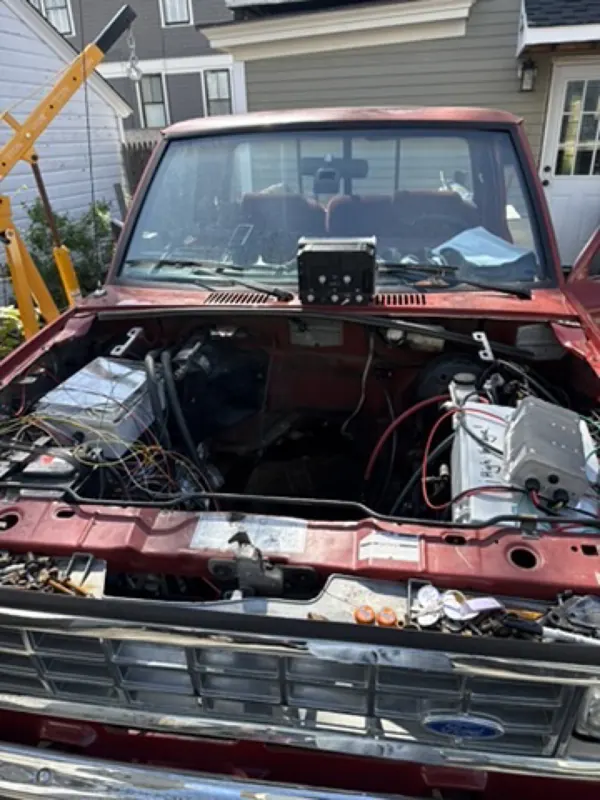
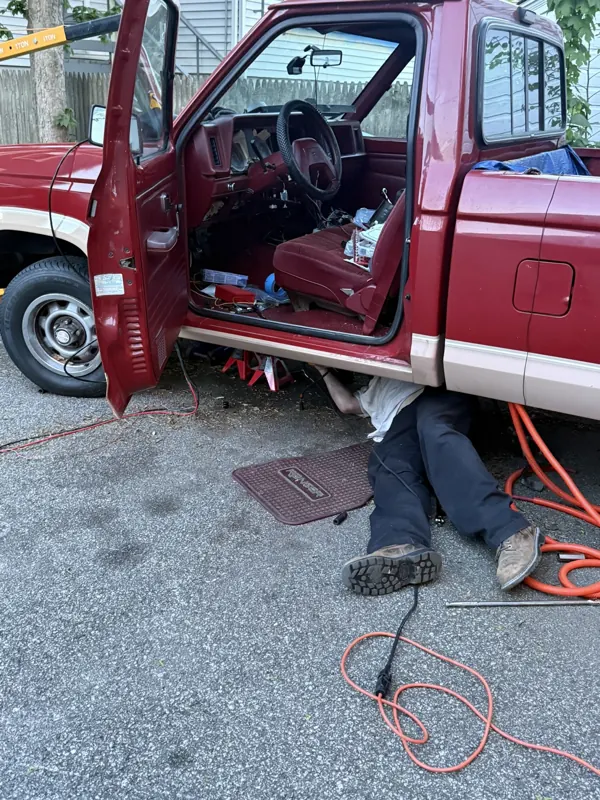
A 1986 Ford Ranger: light, simple, body-on-frame, and nothing on it that talks to a computer. That's close to the ideal starting point for an EV conversion. It came as an automatic, which turned into the biggest single decision of the build. Today it's converted, registered in Rhode Island, and driven every day.
| System | What's in it |
|---|---|
| Motor | NetGain Hyper9 HV, on the original bellhousing with a CanEV adapter plate |
| Inverter | Hyper-Drive AC-X1, 120/144V 500A, liquid cooled |
| Battery | Tesla modules, 36S — about 133V nominal, 108V empty to 151V full |
| BMS | Thunderstruck MCU with two BMSS18 satellite cell monitors |
| Charging | Thunderstruck TSM2500 onboard charger, J1772 + NACS charge port |
| 12V | Thunderstruck DC-DC, 13.8V / 50A, keeping the 12V battery topped up |
| Transmission | Manual, swapped in to replace the factory automatic |
| Power steering | Electro-hydraulic pump from a 2013–2018 Nissan Altima |
| Dash | Raspberry Pi CAN dashboard, open source |
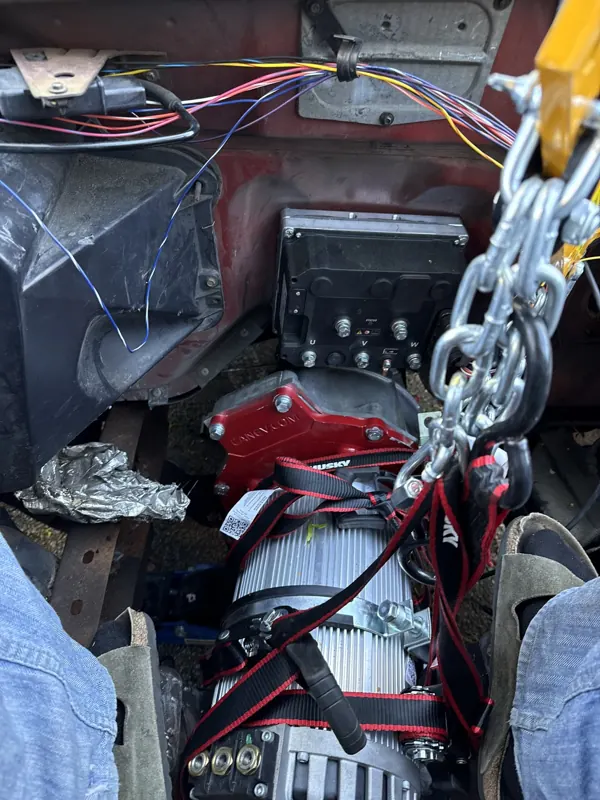
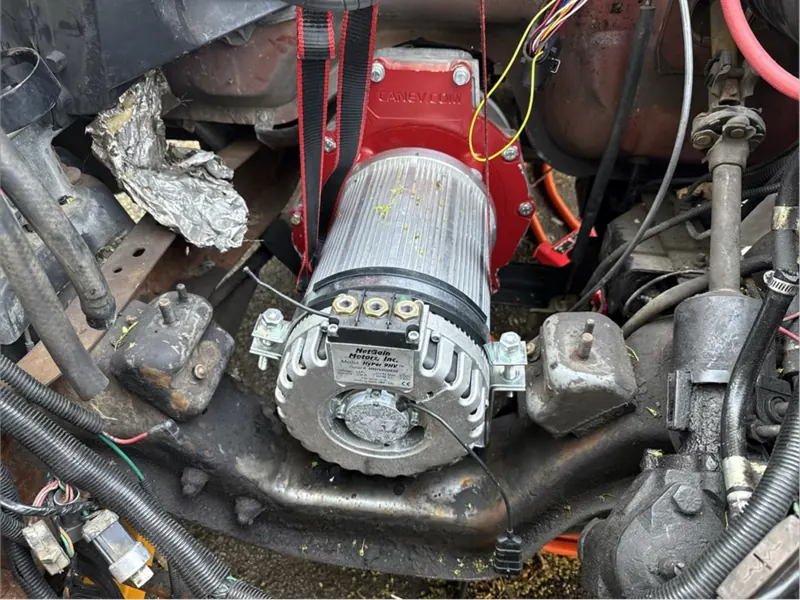
Motor and transmission
The Hyper9 bolts to the Ranger's original bellhousing through a CanEV adapter plate, so the clutch and gearbox do their normal job. Because the truck came with an automatic, the automatic came out with the engine and a manual went in its place. It's more work and more money than keeping a factory manual, but it's the well-worn path and it keeps the drivetrain simple.
In practice the electric motor's torque means most driving happens in one or two gears.
Inverter and cooling
The Hyper-Drive AC-X1 is conduction cooled — all of its heat leaves through its flat aluminum base. On the Ranger it sits on an Inductive Autoworks cold plate, plumbed into an EV West cooling kit: a 12V pump, a small aluminum radiator with two 120mm fans, and a reservoir, running 50/50 aluminum-safe coolant. The X1 starts derating at 80°C on the heatsink, so the fans are set to come on well before that.
Battery pack and BMS
The pack is Tesla modules wired to 36 cells in series, roughly 133V nominal. Every branch off the pack is fused, the main feed goes through a 600A fuse and a contactor, and a precharge relay brings the inverter up gently before the contactor closes. The high-voltage side is fully isolated from the 12V system and the chassis.
A Thunderstruck MCU runs the BMS with two satellite boards reading all 36 cells, and it doubles as the charge controller — no separate EVCC.
Charging
A Thunderstruck TSM2500 onboard charger feeds the pack from a J1772 + NACS charge port, so the truck plugs into ordinary Level 2 stations and home chargers. The port's pilot and proximity lines go to the MCU, which tells the charger what to do over CAN.
Everything the engine used to run
- 12V power: a DC-DC converter keeps the 12V battery charged whenever the pack is live.
- Power steering: an electro-hydraulic pump from a Nissan Altima replaces the belt-driven pump. It has its own heavy fused feed and was bench-tested before it went in the truck.
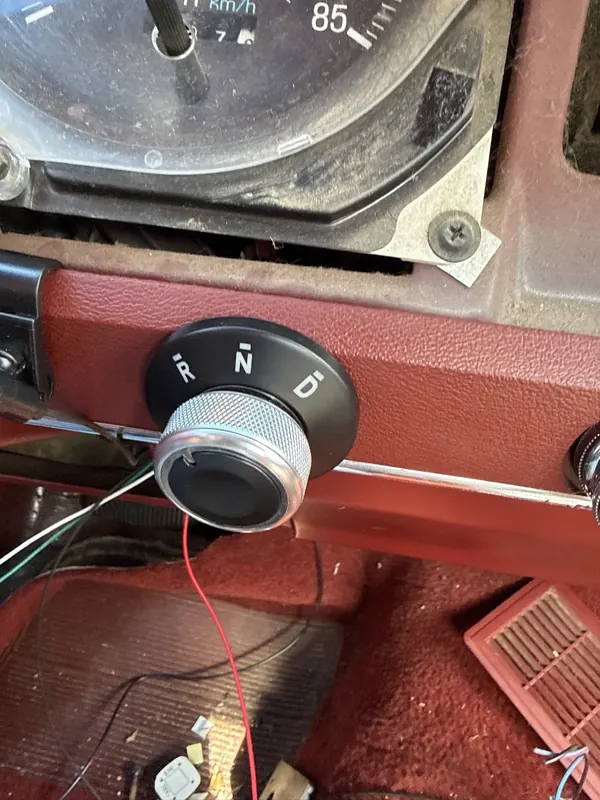
- Drive selector: a rotary R / N / D knob in the dash.
- Regen modes: a three-position toggle selects the X1's operating profiles — coast with no regen, moderate regen, and strong one-pedal regen.
The dashboard
The factory gauges don't know what a battery is, so the Ranger runs a custom dashboard on a Raspberry Pi with a two-channel CAN hat — one bus for the battery and charger, one for the motor controller. It shows state of charge, pack voltage and current, temperatures, and motor data, and feeds Home Assistant. A small always-on ESP32 can wake the truck remotely and reads the battery bus while it charges, without keeping the Pi running.
There's also a read-only openpilot port built from the truck's real CAN signals. Steering control isn't possible without an electric power steering actuator, which this truck doesn't have.
What we'd tell anyone starting a conversion
- Start with a manual transmission if you can. Swapping out an automatic is the most avoidable cost.
- Pick the BMS early and configure it for your real cell chemistry.
- Fuse every high-voltage branch and keep HV isolated from chassis ground.
- Plan for the things the engine quietly did for you: power steering, brakes, heat, 12V charging.
- Document the wiring as you go. The ranger-ev repo is ours, and it has saved us more than once.
Open source
Wiring references, CAN decoding, the dashboard, and the openpilot port are all public: ranger-ev and ranger-dashboard. If you're doing your own Hyper9 or Thunderstruck build, they're a good place to start — and we do build consulting if you get stuck.