Why convert a classic car to electric
A classic or project car is often a better EV than it ever was a gas car. It starts and runs every time, doesn't leak, doesn't need a tune-up, and it has instant torque. Most classics are light and mechanically simple, with no computers to integrate, which makes them some of the most rewarding vehicles to convert.
The goal is to keep what makes the car worth owning — the body, the interior, the way it looks and sits — and replace only what's under it.
What makes a good candidate
- Light and simple — less weight means a smaller pack for the same range.
- Solid structure — battery weight has to be carried safely. Rust repair comes before a conversion, not after.
- Room for batteries — engine bay, trunk, and the space where the fuel tank lived.
- A manual gearbox — the simplest path is keeping it and mating the motor to the bellhousing.
Keeping the character
Weight and balance
Where modules go changes how the car handles. We place the pack to keep weight low and close to the original balance, then check suspension and brakes against the new weight.
Gauges and dash
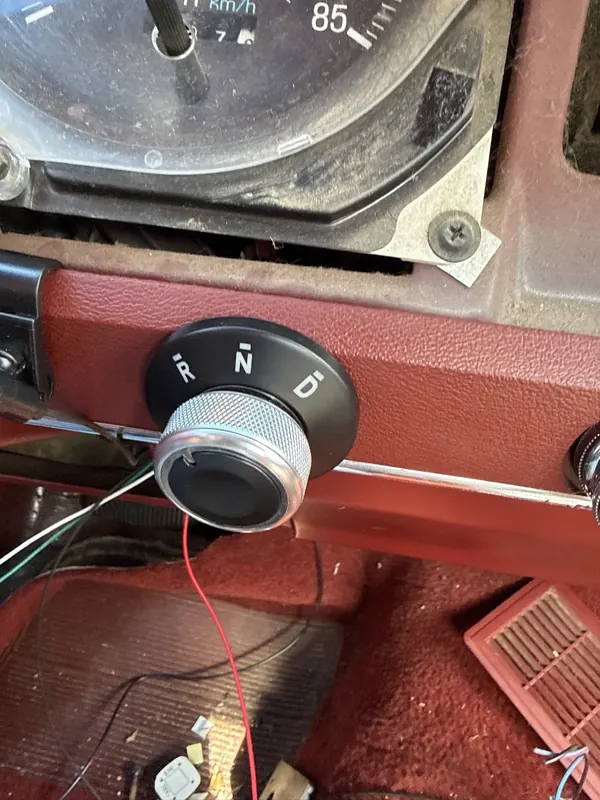
Original gauges don't know what a battery is. They can be kept and driven from the new system, or paired with a discreet display for state of charge and pack data. On our Ranger we added a small drive selector knob and kept the original dash.
Charging without cutting the body
The charge port can often live behind the original fuel door, so the car looks untouched from the outside.
Heat, brakes, and steering
Anything that ran off the engine — vacuum brake assist, power steering, cabin heat — gets an electric replacement or is deliberately left out.
Reversibility
If originality matters to you, tell us early. We can plan the conversion around the car's original mounting points and keep the original engine parts so the change isn't permanent.
What the conversion includes
- AC motor and inverter sized to the car
- Battery pack design, enclosures, and mounting
- Battery management, contactors, fusing, and high-voltage safety
- Onboard charger and J1772 or NACS charge port
- 12V system, gauges, and dash integration
Cost and range
Both come down to the same few things: pack size, the car's weight, and what it takes to fit everything cleanly. We quote per car after a real conversation about how you drive it. See the line-by-line cost breakdown.
Where we work
We're based in Rhode Island, and we take classic car conversions from across New England and the Northeast. If you're building it yourself, we can consult on components and wiring or put together the parts list.